Blueprint Manager
SDK source (GitHub): https://github.com/tangle-network/blueprint/tree/v2/crates/manager
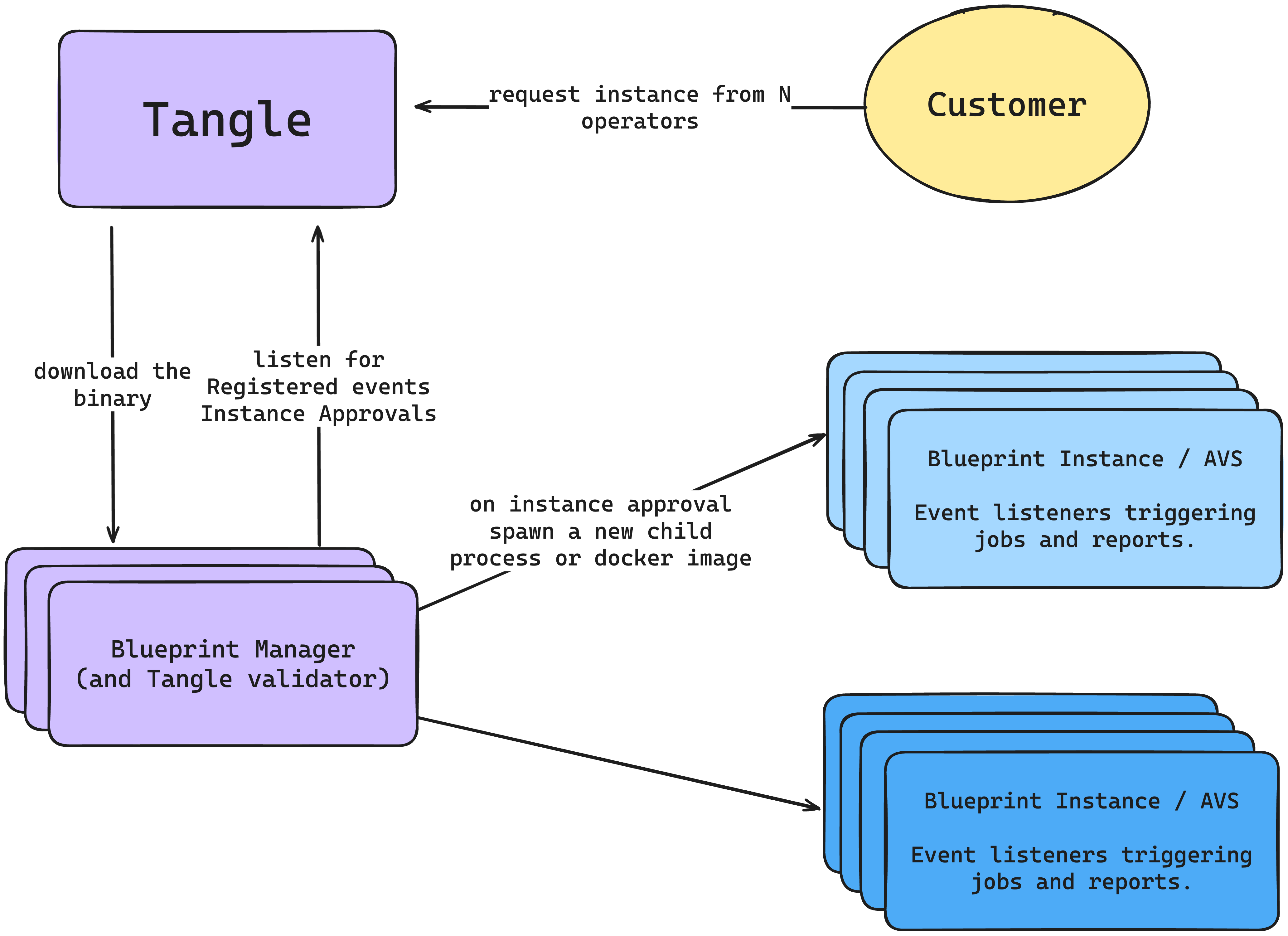
On Tangle, Blueprints have both on-chain and off-chain lifecycles. The off-chain component is managed by the Blueprint Manager, which is the operator runtime for Tangle v2 services. This on-chain and off-chain logic functions as follows:
- Operators must register for Blueprints onchain. This indicates an operators willingness to accept requests for Blueprint Instances of that type.
- Operators download the Blueprint’s artifacts and metadata after registering. The Blueprint Manager watches chain events and keeps the operator runtime in sync.
- Operators execute Blueprint services when they are assigned. The Blueprint Manager runs artifacts natively, in a container, or inside a VM based on the blueprint definition.
Blueprint and Service Instance Lifecycle
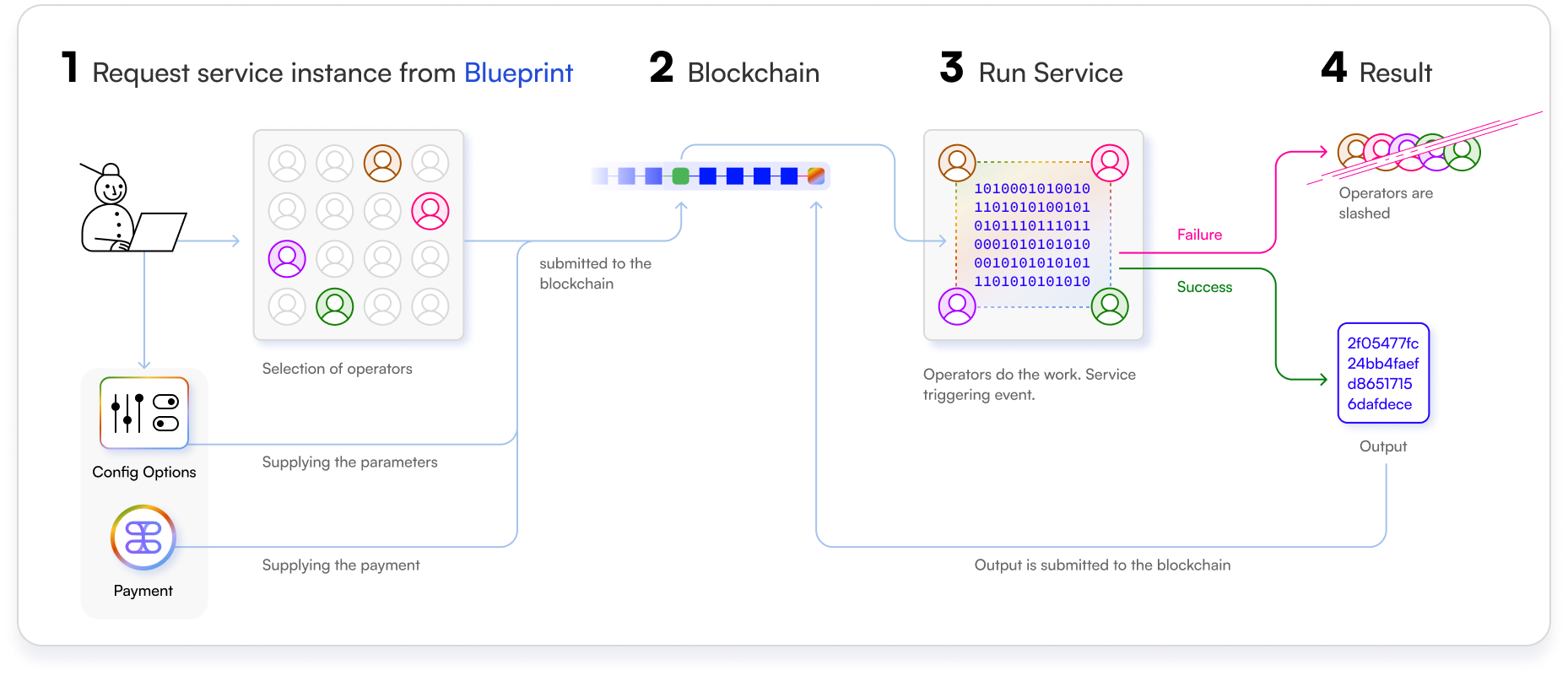
Blueprints interact with the Tangle Network in several key ways:
- Blueprints are deployed to Tangle, with their metadata and manager contracts stored on-chain.
- Customers instantiate a Service, which represents a single configured service instance.
- Services end once they reach their time-to-live (TTL) or run out of funds to pay operators.
Blueprints provide a useful abstraction, allowing developers to create reusable service infrastructures as if they were smart contracts. This enables developers to monetize their work and align long-term incentives with the success of their creations, benefiting proportionally to their Blueprint’s usage.
Blueprints and Services are managed by the Tangle v2 contracts in tnt-core, including the core Tangle contract and
the BlueprintServiceManager stack. Staking and operator registration live in these contracts, and the Blueprint
Manager watches their events to decide what to run.